
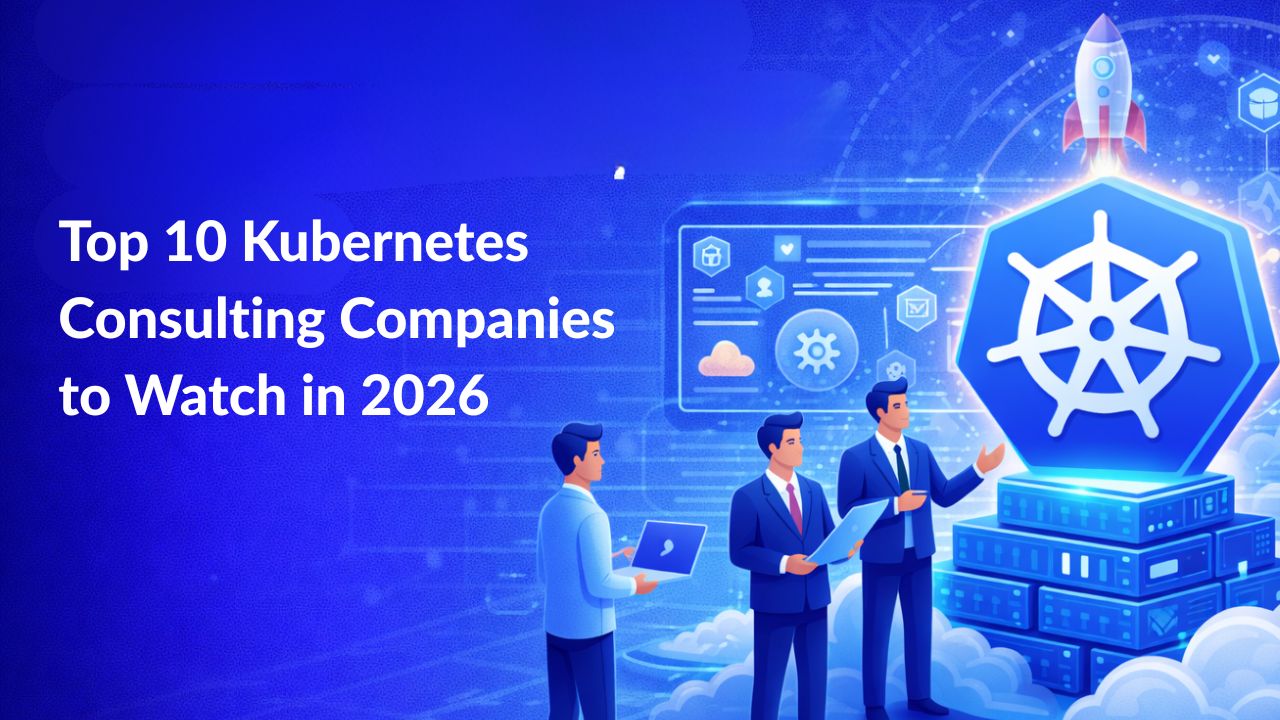
Top 10 Kubernetes Consulting Companies in 2026
Kubernetes adoption at mid-scale companies has reached an inflection point. The technology is no longer optional for teams running containerized workloads, but the expertise required to run it well remains scarce and expensive to hire.
This is where Kubernetes consulting companies fill the gap—providing the architectural guidance, operational know-how, and hands-on implementation that growing organizations lack internally. Below, we break down the top 10 consulting partners for mid-scale businesses in 2026, what separates consulting from managed services, and how to evaluate which type of partner fits your situation.
So what exactly does a Kubernetes consulting company do?
Unlike managed Kubernetes providers that hand you a running cluster, consultants focus on strategy, architecture, and knowledge transfer. They work alongside your team to design solutions that fit your specific technical requirements, security posture, and growth plans.
The real value here is partnership. A managed service provider handles the operational burden of running infrastructure. A consultant, on the other hand, empowers your internal team with architectural blueprints, DevOps integration patterns, and governance best practices. This approach works particularly well for organizations that want to build internal expertise while navigating cloud-native complexity.
Top 10 Kubernetes Consulting Companies for Businesses
The companies below were selected based on their track record serving mid-scale organizations, their balance of strategic guidance and hands-on implementation, and their ability to support Day 2 operations—the ongoing work of monitoring, securing, and optimizing clusters after the initial deployment.
| Company | Core Specialties | Best For | Managed Services |
|---|---|---|---|
| Obsium | AI-driven observability, SRE, 24/7 monitoring | Reliability-focused scaling | Yes |
| InfraCloud Technologies | Platform engineering, open-source tooling | CNCF ecosystem expertise | Yes |
| Dysnix | High-load infrastructure, FinOps | Cost optimization at scale | Yes |
| Fairwinds | Governance, security, cost management | Policy enforcement | Tooling + Consulting |
| SquareOps | DevOps-as-a-Service, CI/CD integration | End-to-end automation | Yes |
| CloudOps | Multi-cloud strategy, FinOps | Financial governance | Yes |
| Container Solutions | Cloud-native transformation, training | Internal skill building | Consulting + Training |
| Reactore | Application development, multi-cloud | Migration projects | Project-based |
| SADA | Google Cloud Platform, GKE optimization | GCP-standardized teams | Via GKE |
| Rackspace Technology | Enterprise managed hosting | 24/7 operational support | Yes |
1. Obsium
Obsium combines AI-driven observability with an integrated SRE and DevOps methodology, tailored specifically for mid-market companies scaling their Kubernetes infrastructure. The approach builds on open-source foundations—tools like Prometheus, Grafana, and OpenTelemetry—while offering 24/7 managed monitoring to ensure high availability.
- Core focus: Proactive reliability through unified metrics, logs, and traces combined with smart alerting that cuts through noise
- Key differentiator: Managed monitoring that goes beyond basic alerting to provide deep insights and rapid incident response
- Best for: Organizations that want a partner to build, operate, and continuously optimize their Kubernetes environment
2, InfraCloud Technologies
InfraCloud Technologies brings deep platform engineering expertise backed by significant contributions to the CNCF ecosystem. Their work on open-source projects like Fission and BotKube demonstrates hands-on experience with the tools that power modern Kubernetes environments.
Organizations looking to build robust internal platforms using best-in-class open-source tooling often find InfraCloud's approach aligns well with their goals. They're particularly strong at helping teams adopt CNCF-certified technologies without getting lost in the ecosystem's complexity.
3. Dysnix
Dysnix specializes in high-load, high-growth infrastructure with a strong emphasis on FinOps—the practice of bringing financial accountability to cloud spending. Their predictive autoscaling capabilities help businesses manage costs while maintaining performance under demanding workloads.
For companies where infrastructure costs are a primary concern alongside reliability, Dysnix offers a compelling combination of technical depth and financial discipline.
4. Fairwinds
Fairwinds focuses on Kubernetes governance and policy automation through both consulting and software products. Their tools help organizations enforce security standards, maintain compliance, and optimize costs across managed Kubernetes clusters.
Teams that struggle with configuration drift, security misconfigurations, or runaway cloud costs often benefit from Fairwinds' policy-driven approach. They're especially useful when you have multiple clusters and want consistent guardrails across all of them.
5. SquareOps
SquareOps provides DevOps and Kubernetes managed services with particular strength in CI/CD pipeline integration. They excel at connecting Kubernetes deployments with the broader software development lifecycle, from code commit to production deployment.
Mid-scale companies looking for end-to-end DevOps automation without building a large internal team find SquareOps offers a practical path forward.
6. CloudOps
CloudOps emphasizes multi-cloud strategy and FinOps, helping businesses design and manage Kubernetes deployments across different cloud providers while maintaining strict cost controls. Their Canadian roots and multi-cloud expertise make them a strong partner for organizations with geographic or regulatory considerations.
7. Container Solutions
Container Solutions uniquely combines hands-on implementation with comprehensive training and enablement programs. Rather than creating dependency, they focus on building internal cloud-native capabilities within client organizations.
This approach works well for companies that want to upskill their teams alongside their technical migration. You get the implementation done, but you also walk away with the knowledge to maintain and extend it.
8. Reactore
Reactore is a cloud-native consulting firm geared toward growing businesses navigating multi-cloud strategies. They help companies avoid vendor lock-in while leveraging the best services from different cloud providers.
9. SADA
As a premier Google Cloud partner, SADA offers specialized expertise in Google Kubernetes Engine (GKE). Teams standardizing on Google's ecosystem benefit from their deep GKE optimization experience and proven track record.
10. Rackspace Technology
Rackspace Technology delivers enterprise-grade managed Kubernetes services with robust 24/7 operational support. For businesses that prioritize guaranteed uptime and immediate access to expert support, Rackspace provides a reliable foundation.
Why Mid-Scale Businesses Benefit from Kubernetes Consulting?
Mid-scale companies face a particular challenge: infrastructure requirements too complex for a simple DIY approach, yet teams are too lean to include dedicated platform engineering or SRE departments. Kubernetes consulting bridges this gap by providing specialized expertise without the overhead of full-time hires.
1. Scaling Containerized Applications Without Dedicated SRE Teams
As applications grow, ensuring reliability and performance on Kubernetes becomes a full-time job requiring specialized skills. Site Reliability Engineering (SRE) is a discipline that applies software engineering principles to operations, and most mid-scale teams don't have dedicated SRE staff.
Consultants fill this expertise gap by designing production-grade clusters with proper configurations for high availability and disaster recovery. This allows development teams to focus on building features instead of managing infrastructure. The alternative—learning Kubernetes operations through trial and error in production—tends to be expensive in both time and incidents.
2. Modernizing Legacy Infrastructure with Expert Guidance
Migrating monolithic applications to microservices on Kubernetes involves more than a technical lift-and-shift. It requires fundamental architectural decisions about service decomposition, inter-service communication, and data management.
Consultants bring experience from similar migrations, helping businesses avoid common pitfalls. They've seen what works and what doesn't across dozens of implementations, which means fewer surprises during your migration.
3. Integrating Kubernetes with Existing Cloud and DevOps Stacks
A Kubernetes cluster doesn't operate in isolation. It connects with CI/CD pipelines, observability tools, security scanners, and infrastructure as code (IaC) workflows. IaC refers to managing infrastructure through configuration files rather than manual processes—tools like Terraform and Pulumi are common examples.
Consultants are experts at connecting all of this together, ensuring a smooth flow from code commit to production deployment. Without this integration work, teams often end up with fragmented tooling and manual handoffs that slow everything down.
4. Meeting Security and Compliance Requirements
Operating in regulated industries or simply adhering to security best practices requires deep understanding of Kubernetes security primitives. Consultants help implement critical controls:
- RBAC configuration: Role-Based Access Control that follows least-privilege principles
- Network policies: Traffic segmentation between namespaces and services using tools like Calico or Cilium
- Secrets management: Integration with tools like HashiCorp Vault for secure credential storage
- Audit logging: Automated compliance scanning and reporting for frameworks like SOC 2, HIPAA, or GDPR
How to Choose the Right Kubernetes Consulting Partner
Selecting the right partner comes down to matching their capabilities with your specific situation. Here's what to evaluate.
1. Evaluate Kubernetes and Multi-Cloud Expertise
Look for a proven track record across the major cloud providers—AWS EKS, Google GKE, and Azure AKS. Certified Kubernetes Administrator (CKA) credentials among staff indicate formal expertise, while case studies demonstrate real-world experience.
Ask about multi-cluster architectures too. If your growth plans involve geographic distribution or high availability across regions, you'll want a partner who has designed and managed those configurations before.
2. Assess Observability and SRE Capabilities
A strong consultant doesn't just build a cluster—they make it observable. Look for partners who integrate monitoring, logging, and tracing from day one using tools like Prometheus, Grafana, and OpenTelemetry.
More importantly, ask how they approach alerting. Smart, low-noise alerting that surfaces actionable insights separates experienced practitioners from those who simply install default configurations. Alert fatigue is a real problem, and good consultants know how to avoid it.
3. Review Managed Kubernetes Service Options
Determine whether you primarily want project-based consulting to get started or ongoing operational support to run your clusters. Many firms offer both, allowing you to transition from an initial implementation to a long-term managed service as your situation evolves.
4. Confirm Engagement Models and Ongoing Support
Get clarity on how the partnership will work in practice. Flexible engagement models might include 24/7 managed monitoring, staff augmentation to supplement your team, or fixed-scope projects with clear deliverables.
Tip: Ask potential partners about their approach to knowledge transfer. The best consultants leave your team more capable, not more dependent.
Kubernetes Consulting vs Managed Kubernetes Service Providers
Understanding this distinction helps you choose the right type of partner for your situation.
| Aspect | Kubernetes Consulting | Managed Kubernetes Service |
|---|---|---|
| What you get | Strategy, implementation, optimization guidance | A fully operated Kubernetes cluster |
| Team involvement | Higher—focus on knowledge transfer and co-building | Lower—provider handles day-to-day operations |
| Best for | Building internal capabilities, solving architectural challenges | Offloading operational burden entirely |
Many providers offer both consulting and managed services. The key is identifying whether your primary goal is strategic guidance or operational offloading—or some combination of both.
Common Challenges Kubernetes Consultants Help Solve
Consultants address practical problems that mid-scale teams encounter when adopting Kubernetes at scale.
1. Cluster Design and Architecture for Managed Kubernetes Clusters
Right-sizing node pools, selecting cost-effective instance types, designing namespace strategies, and planning for multi-tenancy all require experience that most teams don't have internally. Consultants bring pattern knowledge from similar implementations, which means fewer expensive mistakes during initial setup.
2. CI/CD Pipeline Integration and Automation
Connecting Kubernetes deployments with GitOps workflows using tools like ArgoCD or Flux, and establishing infrastructure as code practices with Terraform or Pulumi, makes cluster management repeatable and version-controlled. This is where a lot of teams get stuck—the cluster works, but the deployment process is still manual and error-prone.
3. Unified Monitoring and Smart Alerting Configuration
Implementing comprehensive observability stacks is one thing. Configuring intelligent alert rules that reduce notification fatigue and surface only actionable insights is another. This tuning often makes the difference between a team that responds effectively and one drowning in noise at 3 AM.
4. Security Hardening and Compliance Automation
Pod security standards, network segmentation, secrets management, and automated compliance scanning all require specialized knowledge. Consultants help implement controls correctly from the start, which is far easier than retrofitting security after the fact.
Find the Right Kubernetes as a Service Provider for Your Business
Choosing the right partner comes down to evaluating technical expertise, understanding engagement models, and ensuring alignment with your company's scale and goals. For mid-scale companies, the ideal partner often provides both strategic consulting to build things right and managed services to ensure long-term reliability.
Teams seeking an integrated Kubernetes consulting partner that combines deep architectural expertise with AI-driven observability and 24/7 managed monitoring can Contact Us to discuss their requirements.
FAQs about Kubernetes Consulting Companies
How much does Kubernetes consulting typically cost for mid-scale businesses?
Pricing varies widely based on engagement scope. Fixed-fee assessments might start at a few thousand dollars, while comprehensive implementation projects can range from tens of thousands to six figures. Ongoing managed services typically follow monthly retainer models. Request detailed proposals from multiple providers to compare costs and deliverables before committing.
How long does a typical Kubernetes consulting engagement last?
Initial implementation or migration projects often span several weeks to a few months depending on complexity. Ongoing advisory, SRE-as-a-service, or managed services can continue indefinitely based on operational requirements.
Can Kubernetes consultants integrate with my existing AWS, Azure, or Google Cloud environment?
Yes. Any reputable consultant will have expertise across major cloud platforms and can optimize your use of managed Kubernetes services like EKS, GKE, or AKS. They can also help migrate workloads between providers if your situation changes.
What certifications indicate a qualified Kubernetes consulting company?
Look for Certified Kubernetes Administrator (CKA) and Certified Kubernetes Application Developer (CKAD) credentials among staff. Cloud-specific certifications like AWS Certified Solutions Architect or Google Cloud Professional Cloud Architect demonstrate platform expertise beyond just Kubernetes itself.
Do mid-scale companies still benefit from consulting if they already use a managed Kubernetes service?
Absolutely. Managed services like EKS and GKE handle the control plane—the underlying infrastructure that runs Kubernetes itself. But they don't manage your application architecture, CI/CD pipelines, observability stack, or security configurations. Consultants help optimize the layers that run on top of the managed service, which is where most of the complexity actually lives.
Recent Posts
Ready to Get Started?
Let's take your observability strategy to the next level with Obsium.
Contact Us