


What is Karpenter? Karpenter is an open-source Kubernetes cluster autoscaler that automatically provisions right-sized compute nodes in response to pending, unschedulable pods. Instead of relying on static node groups, Karpenter launches nodes dynamically based on real workload requirements. It improves scaling…
KMS (Key Management Service)
What is KMS (Key Management Service)? Key Management Service (KMS) is a centralized service used to create, manage, rotate, and control cryptographic keys for securing data. It enables organizations to encrypt sensitive information and maintain strict control over how encryption keys…
Kubectl
What is Kubectl? Kubectl is the command-line interface used to interact with Kubernetes clusters. It allows users to deploy applications, inspect cluster resources, manage workloads, and troubleshoot issues by communicating directly with the Kubernetes API server. Kubectl acts as the primary…
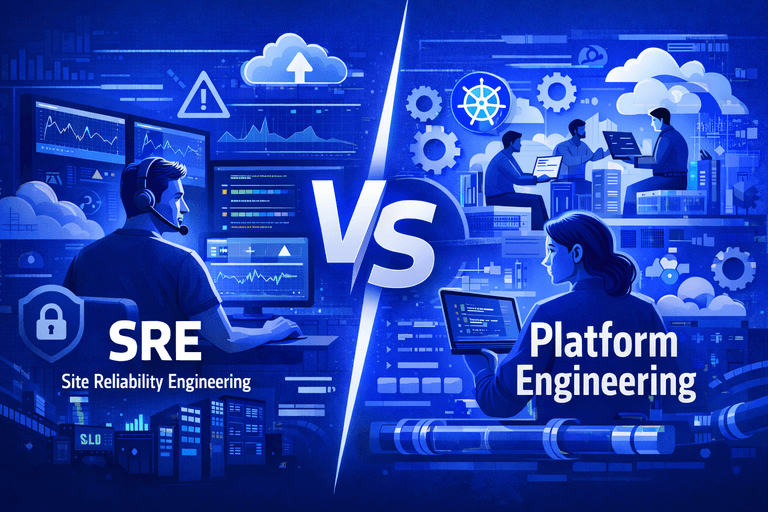
SRE vs Platform Engineering: What’s the Difference and Why It Matters
In the early days of DevOps, the mantra was straightforward: “You build it, you run it.” That approach worked when systems were smaller, and complexity was manageable. But as organizations moved into large scale Kubernetes environments and highly distributed microservices, that…
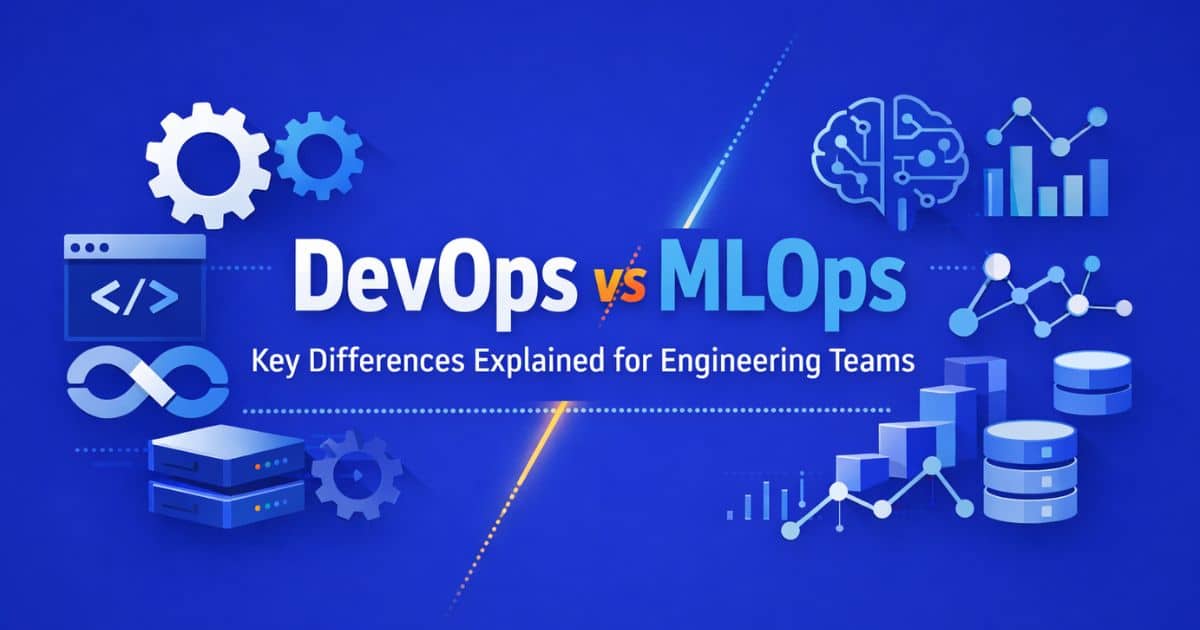
DevOps vs MLOps: Key Differences Explained for Engineering Teams
Over the last decade, DevOps reshaped how software is built and delivered, enabling faster releases, automated pipelines, and shared ownership between development and operations. According to Google’s DORA research, high-performing DevOps teams deploy code up to 208x more frequently and recover…
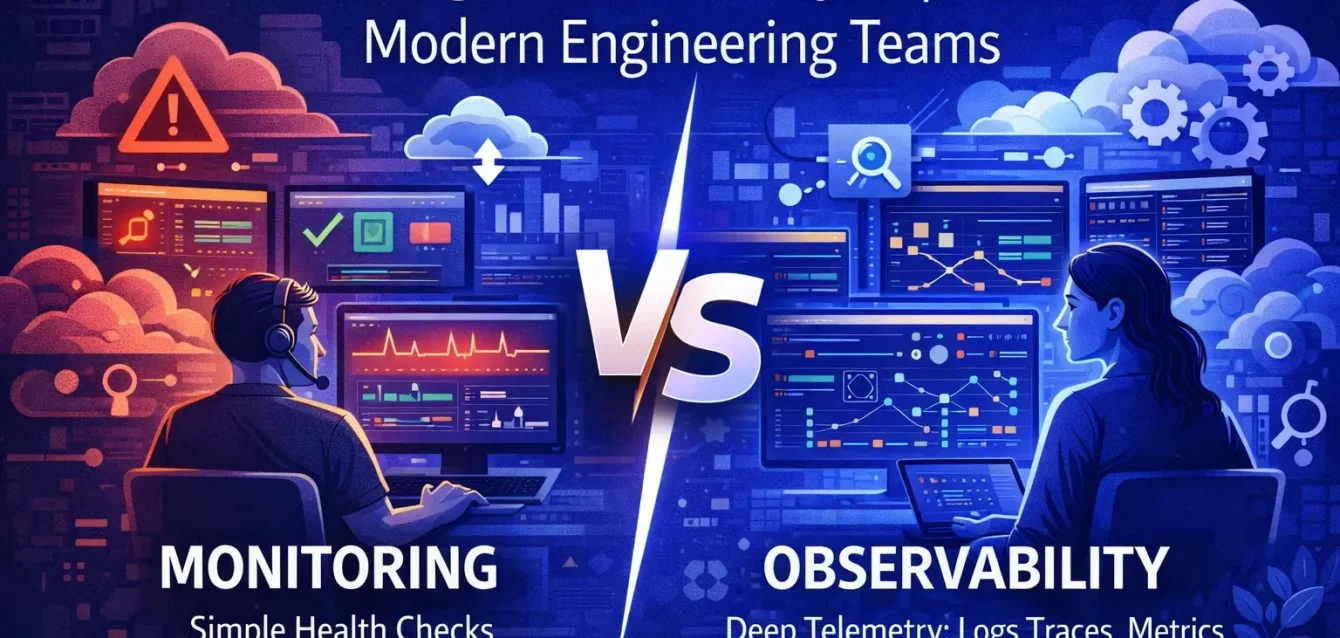
Monitoring vs Observability: Explained for Modern Engineering Teams
It’s 2 AM. Your monitoring dashboard shows everything green. CPU usage: normal. Memory: stable. Response times: within acceptable limits. Yet your phone won’t stop buzzing with alerts. Users can’t complete checkout. Your API is timing out. Revenue is dropping. You’re staring…

Why Cloud Bills Grow Faster Than Revenue and How to Stop It
You’re well into the fiscal year. Revenue is up 40 percent. The product roadmap is delivering. Customers are engaged. On the surface, everything looks healthy. Then the CFO asks a simple question:“Why did our cloud bill just double?” You open the…
Platform Engineering Explained: Why Internal Platforms Are the Future of DevOps
Platform engineering is becoming a core part of how modern engineering teams work. While it grew out of DevOps, it doesn’t replace DevOps. Instead, it builds on it and helps teams scale without adding chaos. In this blog, we are going…
What is Business Process Monitoring? A Practical Guide for Modern Businesses
Every organization runs on processes. Approvals move through systems. Requests pass from one team to another. Reports are generated, reviewed, and acted upon. Yet in many businesses, once a process starts, visibility drops. Leaders know something is slow or broken only…