01
Internal Developer Platform
We bring your tools and systems together into one platform so developers can create, test, and launch on their own, with no waiting on multiple teams. Faster releases, smoother workflows, happier engineers.



Everything our engineers know about building internal platforms — golden paths, self-service, and where platform engineering fits next to SRE and DevOps. Articles and comparisons, in one place.
Every platform engineering article we've published. Newest first.
Learn what platform engineering is, how it improves developer workflows, automation, scalability, and modern cloud infrastructure operations.
Read more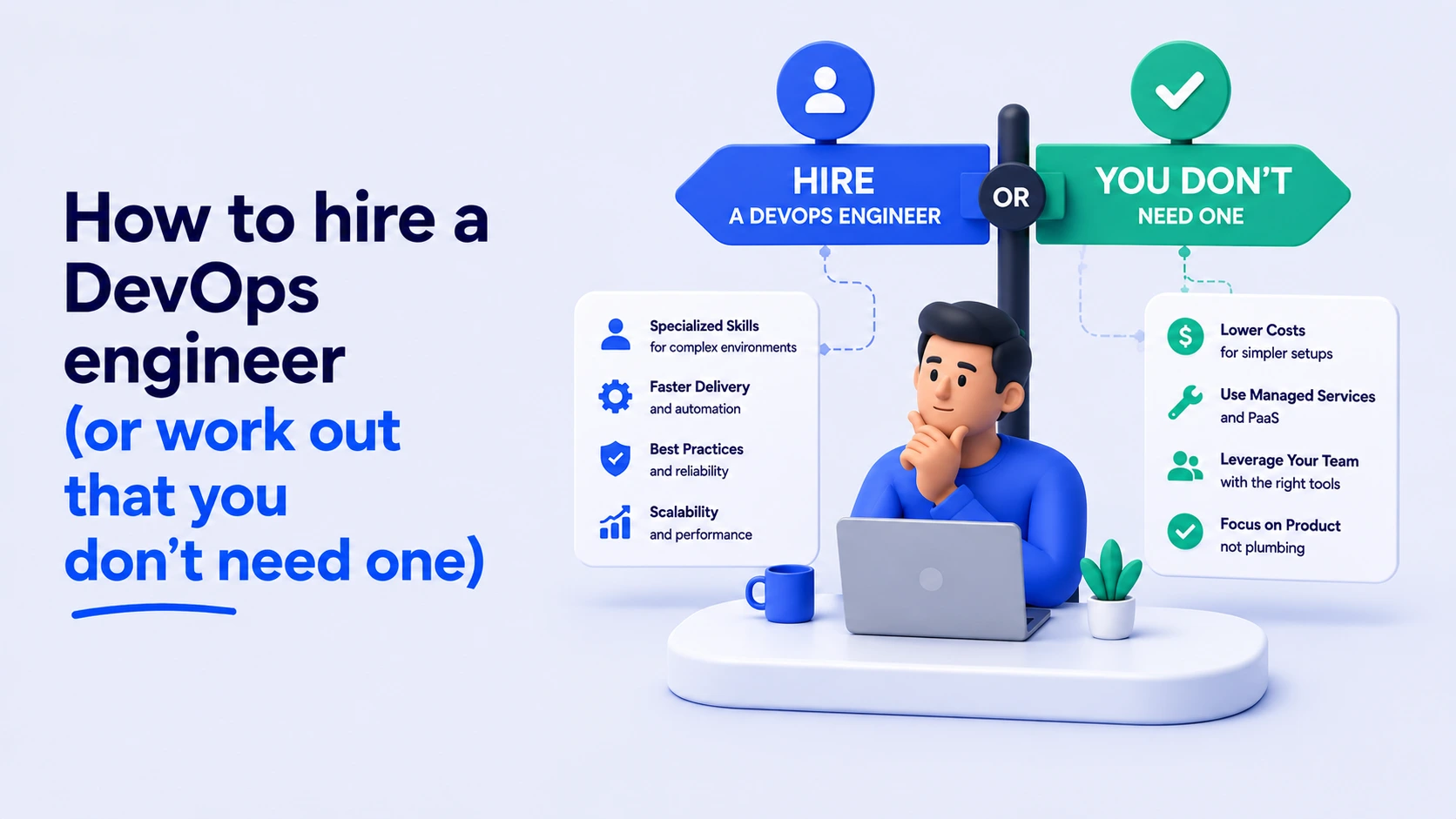
Before you hire a DevOps engineer, check you don't actually need a platform. What the role is in 2026, what it costs, how to…
Read more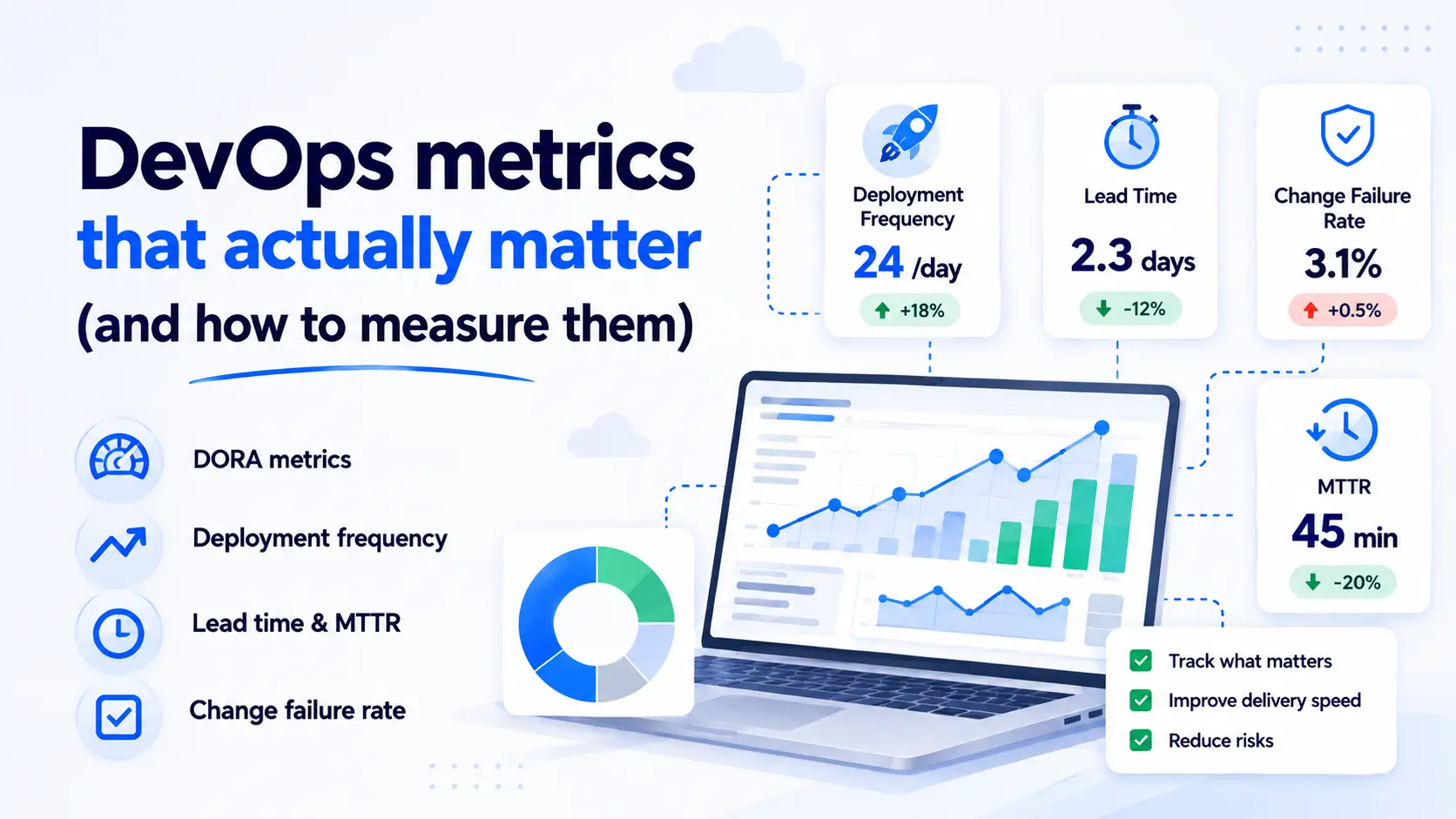
Most DevOps teams track deployment frequency and call it done. Here are the DevOps metrics that actually matter, the DevOps monitoring tools to measure…
Read more
Explore DevOps security best practices for CI/CD, cloud infrastructure, access control, monitoring, and secure software delivery workflows.
Read more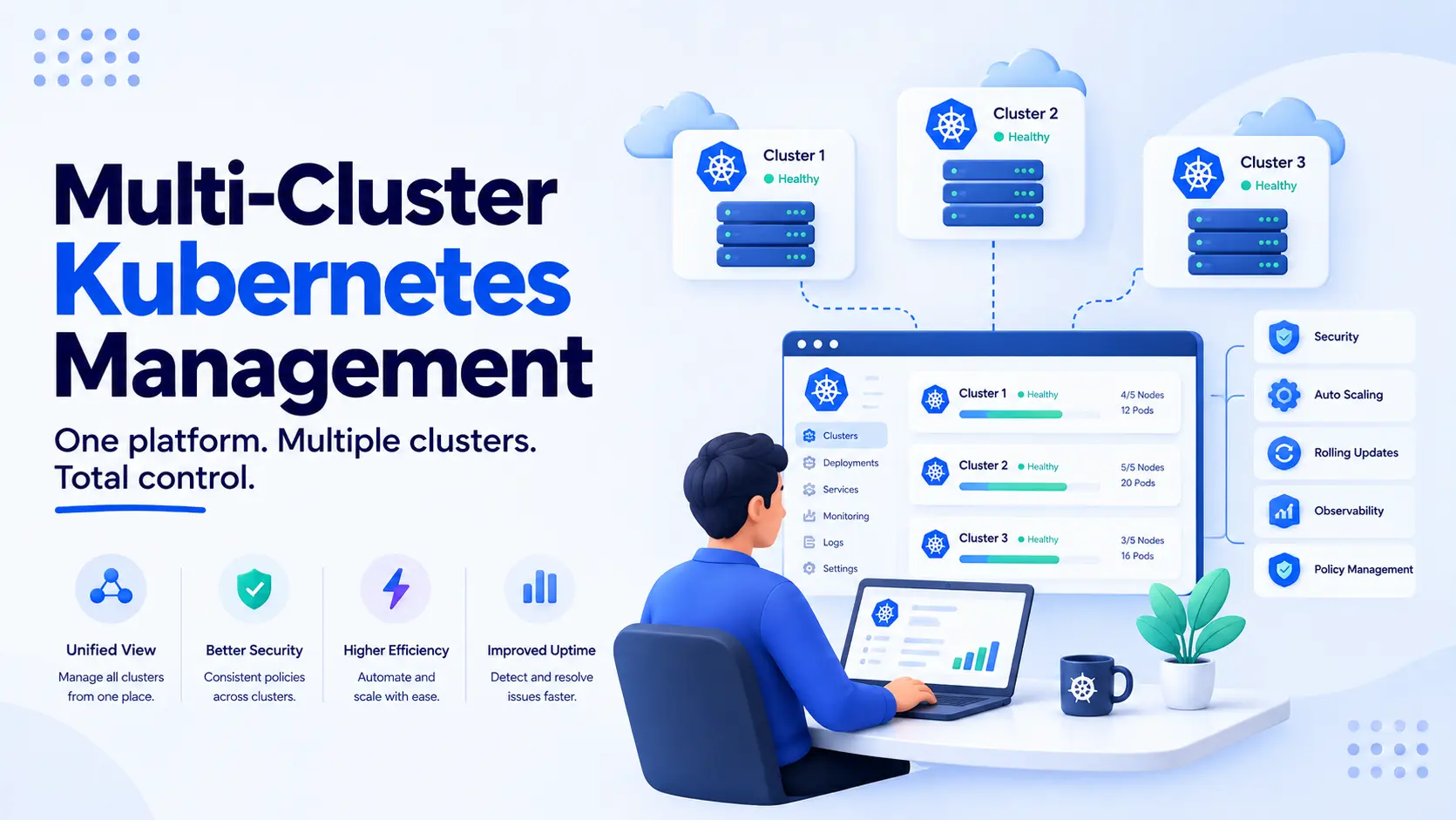
When multiple Kubernetes clusters solve a real problem, what Karmada, Rancher Fleet, and Argo CD ApplicationSets actually do, and how to pick between them.
Read more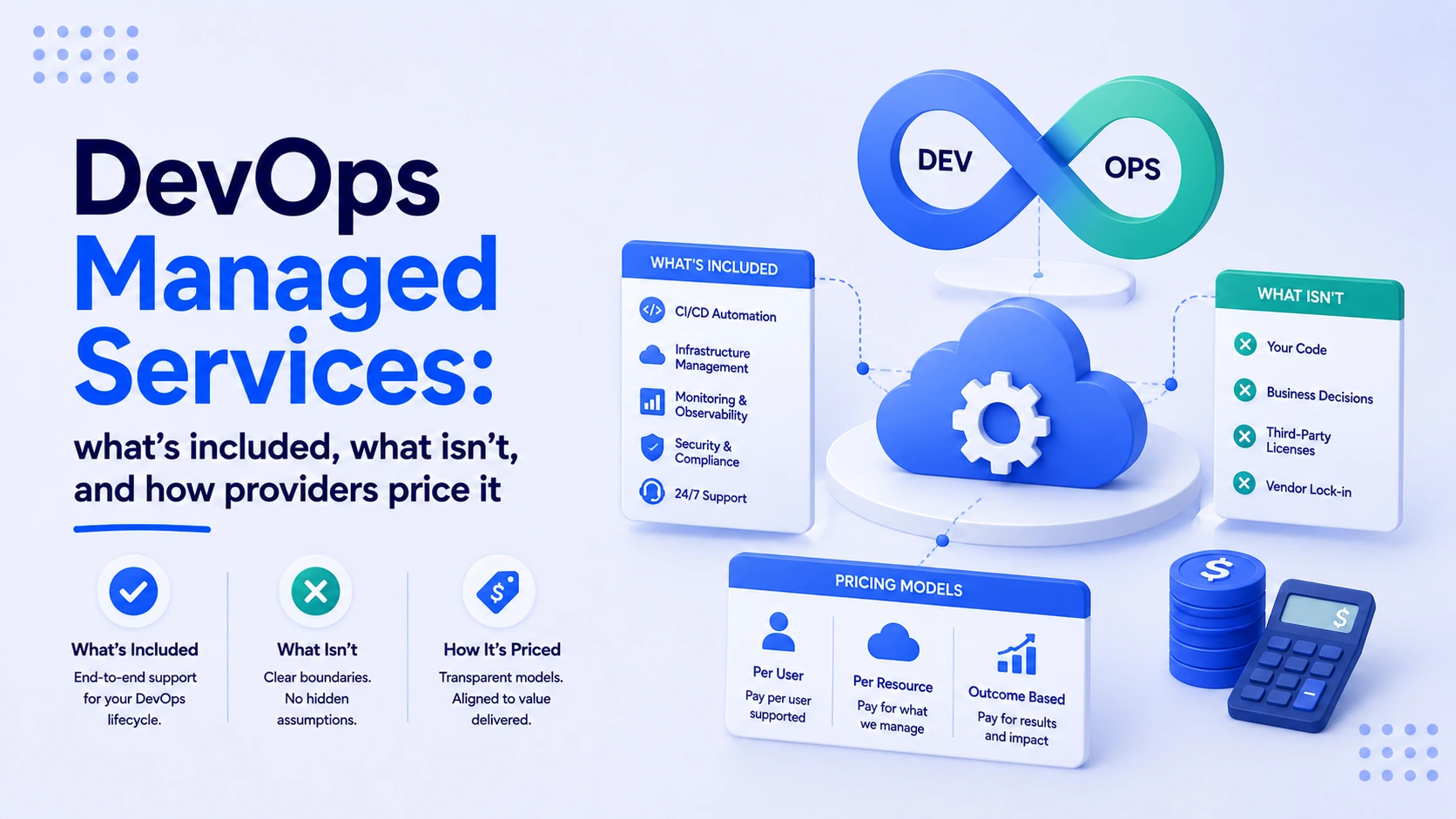
A scope-of-work teardown of DevOps managed services: what's always in scope, what's quietly excluded, how providers price it, and the four contract clauses to…
Read moreWhere platform engineering ends and SRE or DevOps begins is a common question. Start here.
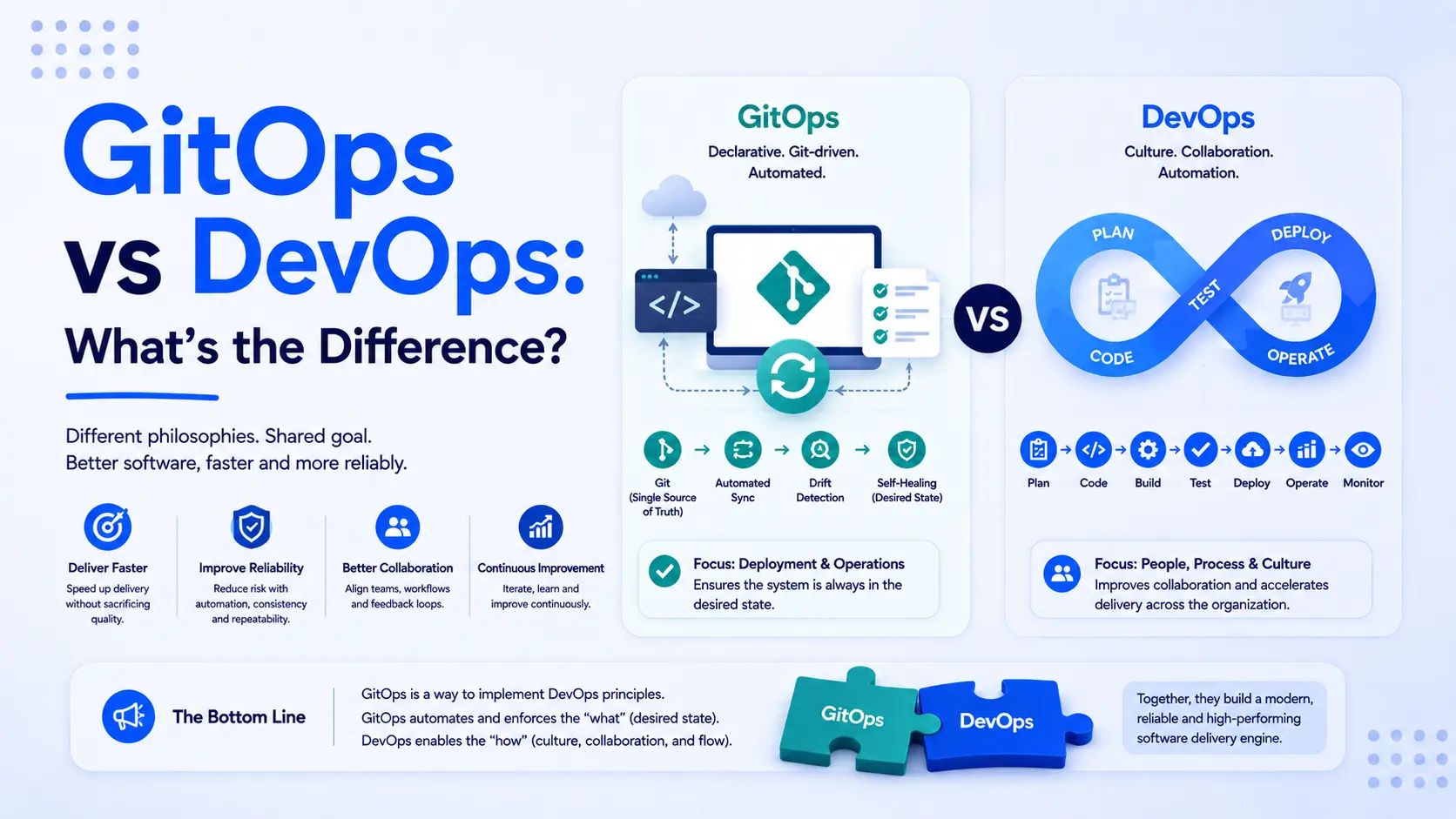
GitOps and DevOps aren't competing approaches. DevOps is a culture spanning the delivery lifecycle; GitOps is an operational model for deployment. The distinction, the…
Read more
Unsure whether to manage your cloud internally or use managed services? This guide breaks down both approaches to help you avoid operational strain and…
Read more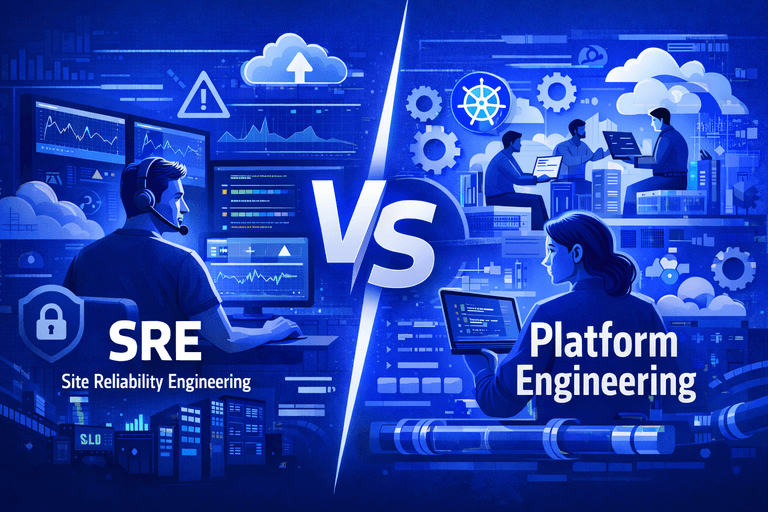
Understand SRE vs Platform Engineering, key differences, responsibilities, and how teams balance reliability, developer velocity, and scale.
Read more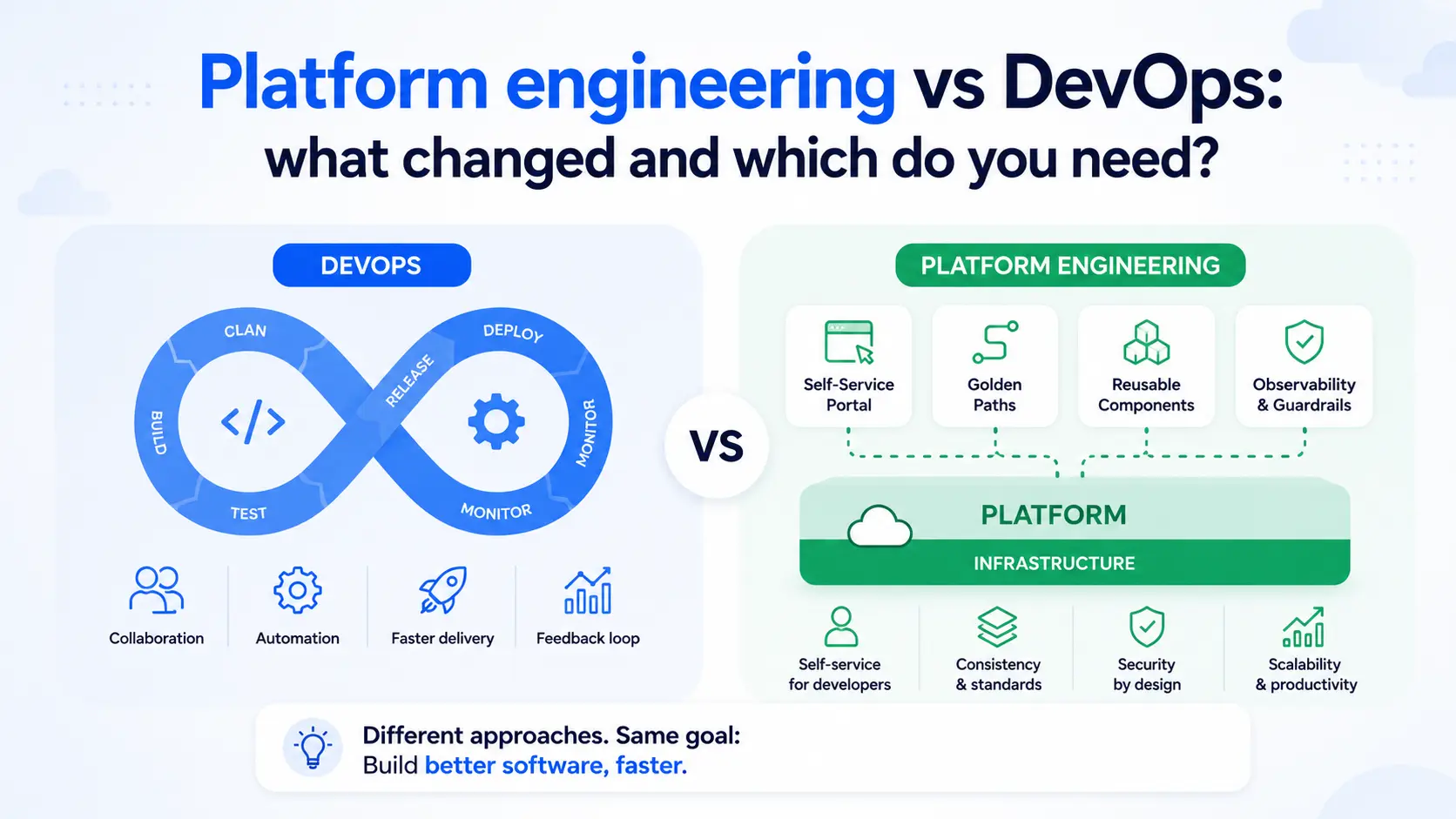
Platform engineering is not DevOps renamed. 80% of large orgs now have platform teams, but 70% of them fail to deliver impact. Here is…
Read more
Discover top DevOps consulting companies helping mid-scale businesses improve cloud automation, CI/CD, scalability, and infrastructure reliability.
Read more
Compare SRE and DevOps approaches, their key differences, benefits, and how they improve reliability, automation, and cloud operations.
Read more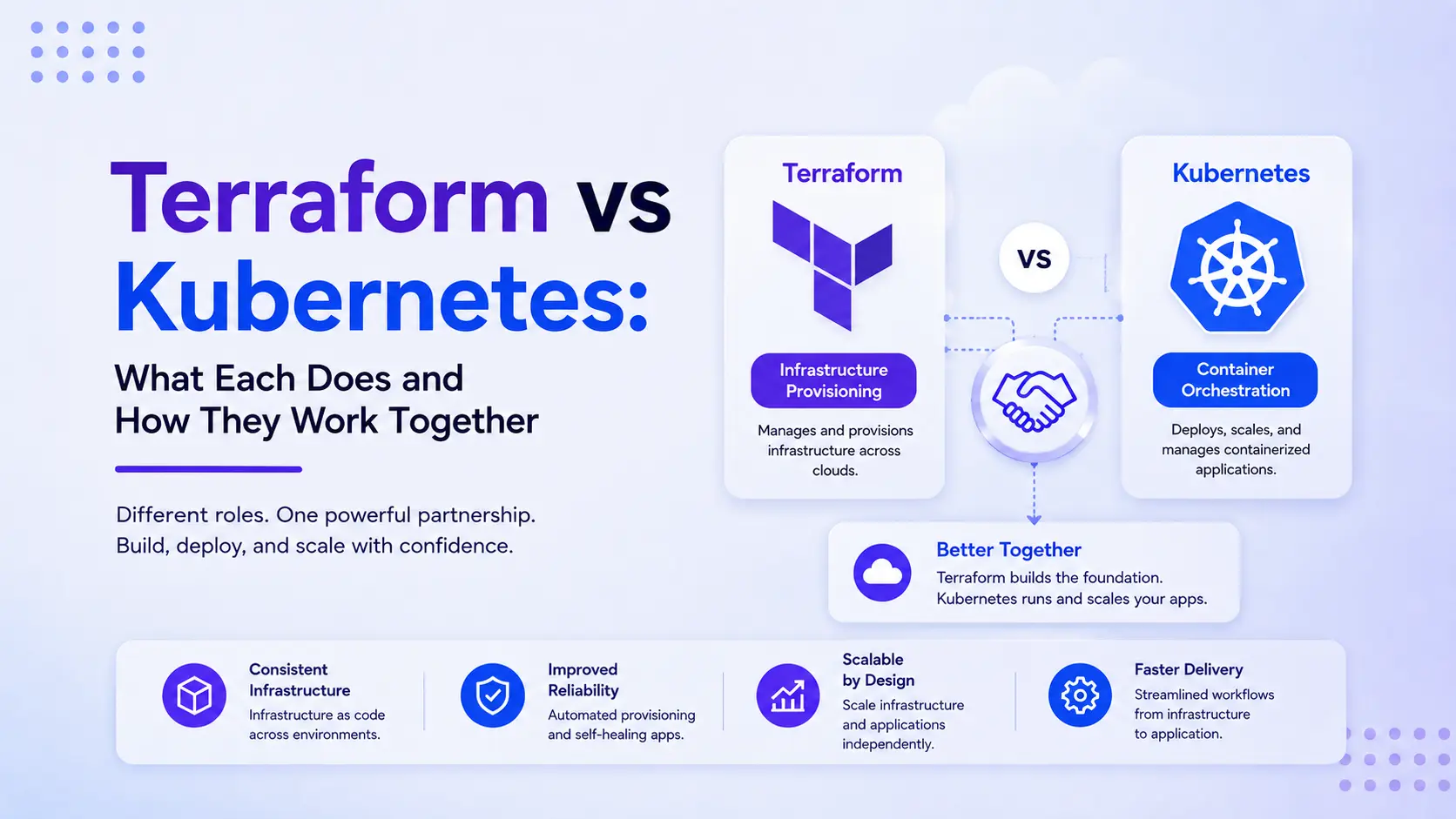
Terraform provisions infrastructure. Kubernetes orchestrates containers. They aren't alternatives. A practitioner's guide to what each does, where the boundary goes, and why Terraform managing…
Read moreNew to the topic? These jump straight to the glossary entry that defines each concept in plain language.
From a golden-path CI/CD setup to a full internal developer platform, our senior engineers build and run it with you — not from a slide deck.
Obsium simplifies software delivery by building unified, automated platforms that give your teams everything they need (infrastructure, CI/CD, observability, and security) in one place. Developers self-serve golden paths instead of filing tickets, so releases get faster and your best engineers stop being the bottleneck.
Certified across the three major clouds, so you get one consistent platform wherever your workloads run.



As you grow, every team reinvents the same infrastructure, pipelines, and guardrails, while your best engineers turn into a ticket queue for everyone else. Platform engineering fixes that by building a single internal platform with paved, self-service paths: developers ship on their own, safely, while standards, security, and observability are baked in. Less glue code, less waiting, more shipping.
Six disciplines, one partner. The layers that turn tool sprawl and tickets into paved, self-service delivery. Built on your stack, owned by your team.
We bring your tools and systems together into one platform so developers can create, test, and launch on their own, with no waiting on multiple teams. Faster releases, smoother workflows, happier engineers.
Paved, automated pipelines from commit to production so shipping is a non-event, standardized across teams, so nobody rebuilds delivery from scratch again.
Reproducible, version-controlled environments that work the same everywhere. No more "it works on my machine" or snowflake setups.
Metrics, logs, and traces integrated across apps and infrastructure from day one, with clear visibility so teams detect and resolve issues before users feel them. Observability is our root discipline.
DevSecOps baked in: policies, access, and compliance checks run automatically in the background, keeping the platform secure from code to production while teams move fast.
Built on Kubernetes and cloud-native patterns to scale seamlessly and stay consistent under any load: efficient today, ready for tomorrow’s demand.
Plug us in at the level you need, from a platform assessment to engineers who build and run it with your team.
A review of your delivery, tooling, and developer experience with a prioritized platform roadmap.
We design and build the platform (IDP, pipelines, observability, guardrails), then hand it over documented.
Senior platform engineers who join your team, build the paved roads, and keep developers unblocked.
We run and evolve your internal platform as an ongoing partner, so it keeps getting better over time.
Three ways to give your developers a platform. Here's the trade, stated plainly.
| DIY in-house | Typical consultancy | Obsiumrecommended | |
|---|---|---|---|
| Developer experience | ✕Tickets & tool sprawl | ~New tools, same friction | ✓Self-service golden paths |
| Who does the work | ~Teams reinventing infra | ✕Seniors pitch, juniors deliver | ✓Senior platform engineers, always |
| Consistency | ✕Snowflake environments | ~Docs, not enforcement | ✓Paved roads, enforced by default |
| Observability | ~Bolted on later | ~Optional line item | ✓Built into the platform |
| Security & governance | ~Manual reviews | ✕Bolt-on, after the fact | ✓Automated, by design |
| Lock-in | ✓None | ✕Proprietary portal & retainers | ✓Open source, yours to keep |
| Pricing | ~Salaries + opportunity cost | ✕T&M that creeps | ✓Fixed range, scoped by outcome |
Four stages. Written deliverables at every one. Your engineers in the room throughout.
We map how your developers actually ship today (the tickets, the waits, the tool sprawl) against where you want to be. You get findings ranked by developer impact.
Platform architecture, golden paths, guardrails, and the developer portal designed for your stack and documented, with the first paved road live from day one.
Staged rollout alongside your team, service by service, with our engineers embedded so your people own the platform, not just inherit it.
We stay on as an escalation point or run the platform with you. Monthly reviews track adoption, delivery speed, and reliability so the platform keeps improving.
Most "platforms" are a wiki page and a pile of tools nobody agrees on. Developers still file tickets, wait on ops, and copy-paste last quarter's YAML. The platform team just becomes the new bottleneck.
We build the opposite. A real platform is self-service and paved: golden paths that make the right way the easy way, with security, observability, and standards built in. We embed with your team and leave the platform, portal, and runbooks in your hands. Adoption is the metric, not activity.
We eliminate tool sprawl by integrating everything your teams need into one cohesive system, not another dashboard to check.
Automated workflows replace manual approvals, so developers focus on building, not waiting on other teams.
We turn monitoring into insight, catching issues before they reach users, built into the platform, not bolted on.
Compliance and protection are embedded into every layer, keeping systems safe as you scale, without slowing anyone down.
Real internal-platform, observability, and modernization engagements across financial services, banking SaaS, and multi-site enterprises.
An internal developer platform on GitHub Actions, Argo CD, and cert-manager. Self-serve deploys with policy, DNS, and TLS in under two minutes, sustaining 300+ concurrent CI/CD runs with zero degradation.
Read the case study →A multi-tenant Grafana LGTM platform with an S3 backend and Terraform provisioning. Collection agents cut from three to one per cluster, zero-touch onboarding, and no public-internet telemetry exposure.
Read the case study →A phased migration of 54 Windows Server workloads and ~18 TB off on-prem VMware to AWS with 0 hours downtime, 100% data integrity, and no application changes for 100+ concurrent users.
Read the case study →"We worked closely with Obsium on an application modernization project for a US-based healthcare customer. Their team successfully migrated the platform to AWS, implemented Kubernetes, and deployed a robust observability stack.
Obsium demonstrated deep expertise in cloud-native technologies and delivered the engagement with professionalism and technical excellence. We highly recommend Obsium for organizations seeking modern cloud, Kubernetes, and observability solutions."
 — Rinish K N, CEO, Thoughtminds.io
Obsium has been our trusted partner whenever we need Cloud, DevOps, and Site Reliability Engineering (SRE) resources. Their team brings deep technical expertise and consistently delivers high-quality professionals who meet client expectations.
The resources provided by Obsium are well-vetted, technically sound, and interview-ready, enabling us to fulfil our client requirements quickly and confidently. We highly recommend Obsium to organizations seeking reliable Cloud, DevOps, and SRE talent, especially when there is a need to onboard skilled resources within short timelines.
 — Jisha Panicker, Head of HR, Ellow Technologies
"Obsium was our preferred partner for implementing an MLOps platform for a Fortune 500 customer in the US. Their team brought strong technical expertise, practical implementation experience, and a proactive approach to the engagement.
They demonstrated excellent understanding of modern cloud, DevOps, and MLOps ecosystems, and executed the project with professionalism and reliability. We highly recommend Obsium to organizations seeking a dependable partner for DevOps and MLOps initiatives."
 — Rajesh P, COO, Wizr.ai
"Obsium team quickly understands project requirements and brings strong technical depth to every engagement. What stands out is their practical approach to solving real infrastructure and operational challenges while maintaining a high standard of professionalism.
We value our collaboration with Obsium and would confidently recommend them to organizations looking for experienced cloud and DevOps expertise."
 — Real Prad, CEO, Sayone Technologies
"We've worked with Obsium on a few client projects where cloud and DevOps expertise was needed alongside our security work. Their team has good technical depth and has been professional to collaborate with."
 — Meera Saraswathi, Technology Risk Lead, ServerAudit
Field notes from the same engineers who design and build these platforms.
A free 30-minute scoping call. You leave with a written fixed range and an honest read on your developer experience and where a platform would pay off. No deck, no drama.
or write to us at hello@obsium.io